Why I rebuilt it
My previous site was an online CV, born when I decided to change job. It did that job well, and I still liked it, but it no longer represented me: it said a lot about my career, and little about me.
Now I am in my AI phase, running many experiments, and I wanted a site that told them, and told who I am today.
Starting from who I am
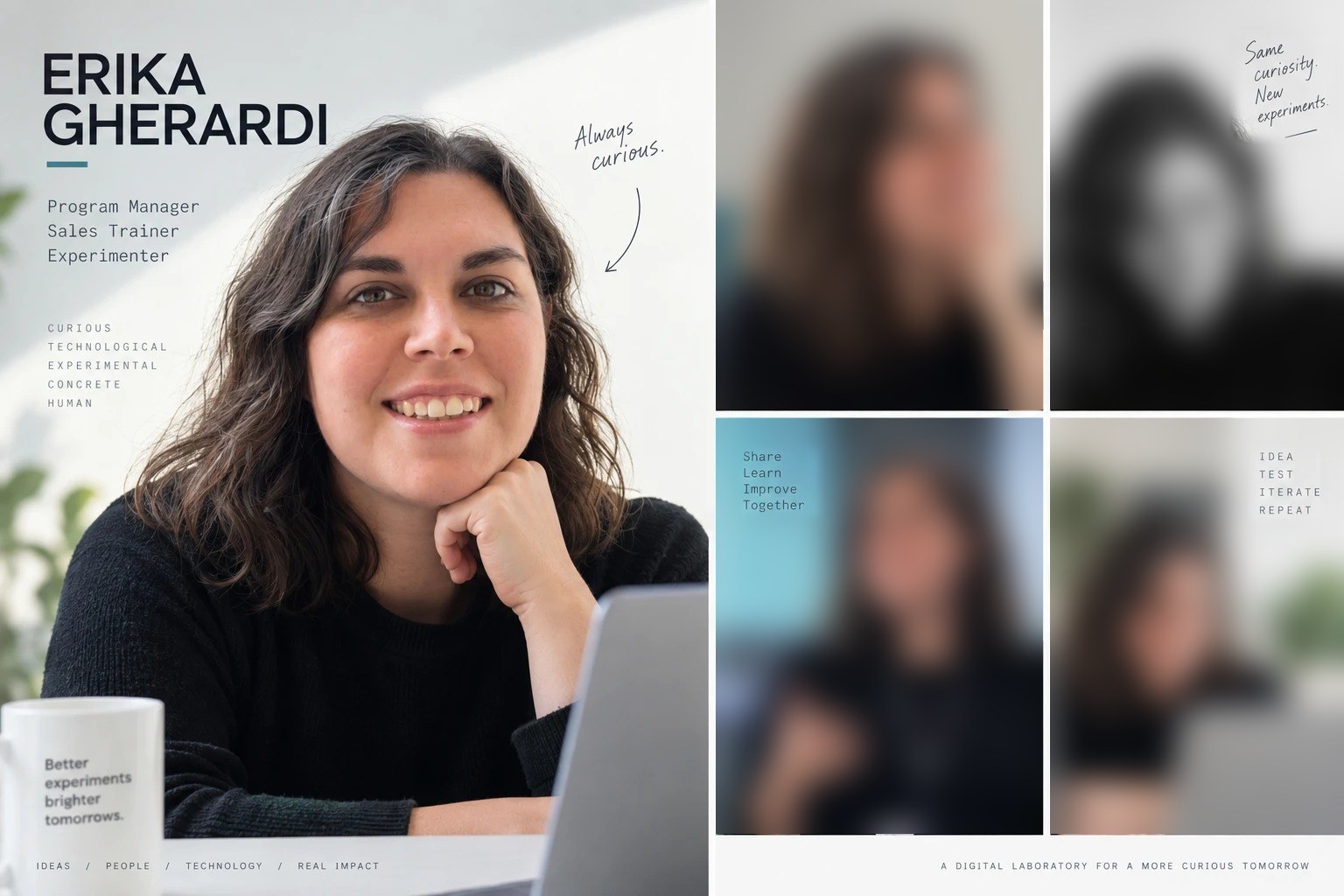
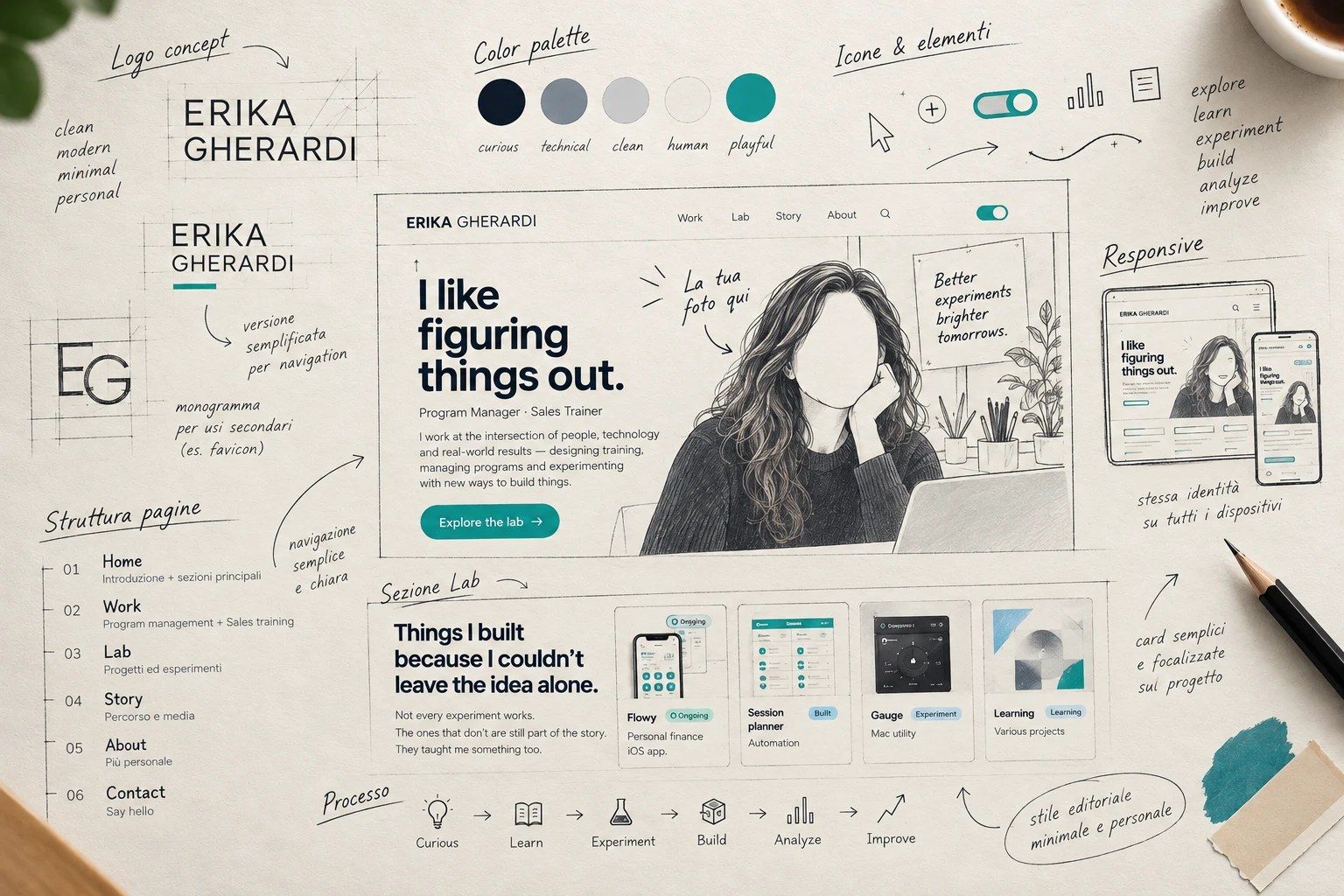
Before the site, I needed a brand identity: a base for presenting myself consistently, at work and on social media. Gemini’s proposal was made of colours, fonts and generic ideas, with none of my essence in it. ChatGPT’s feedback was sharper: to decide on an identity, I first had to understand who I am. From that conversation came a real brand identity document, and with it the theme of the whole site: curiosity.
It also gave us the idea of the Lab, a place for my experiments. Today many of them are about AI, but my curiosity might take me elsewhere.
How we built it
I gave all this to Claude Code, let it analyse my existing WordPress site, and we decided everything together: sections, colours, fonts. I also made sure the site would be sound in its structure, with attention to SEO and to GEO, the optimisation for AI search.
We began with the homepage, then moved to a local copy of the site in WordPress, on my Mac, and kept refining. Along the way came the playful details: a line that forms by itself when you stay idle, one you can draw yourself at the top, a roll of the dice at the end of every project that takes you to another experiment at random, and a small game for anyone who lands on a page that does not exist.
The resume is a short summary on the homepage and a full page for those who want more. The Lab is a selection of what I do with AI: for privacy, and because not all of it is worth reading. I hope it helps anyone approaching AI to see what is possible. What you find here is what I do, not everything that can be done: it is the experience I have built so far and want to share. In six months I will have more of it, and more to tell.
What I learned
The first thing I learned is about brand identity. Mine is not a professional’s: the logo, the favicon and the graphics are simple. But the work helped me bring my core into focus: curiosity.
The second is about time. I expected AI to make me faster. Instead, building the site and writing every Lab article from scratch took dozens of hours, and the work is not finished yet.
The third: AI helps, but does not replace you. The thinking stays with you, and that is the part that counts.